For decades, steel and concrete have been the default for commercial structures: they are familiar, reliable, and perceived as the most cost-effective materials. However, as the building industry reckons with embodied carbon, mass timber is becoming not just a sustainable alternative, but also, increasingly, a competitive one. That’s what BBB found in a recent BBB life cycle assessment (LCA) case study, which suggests that timber may not only outperform steel environmentally but can also match it on cost.
Testing Our Assumptions
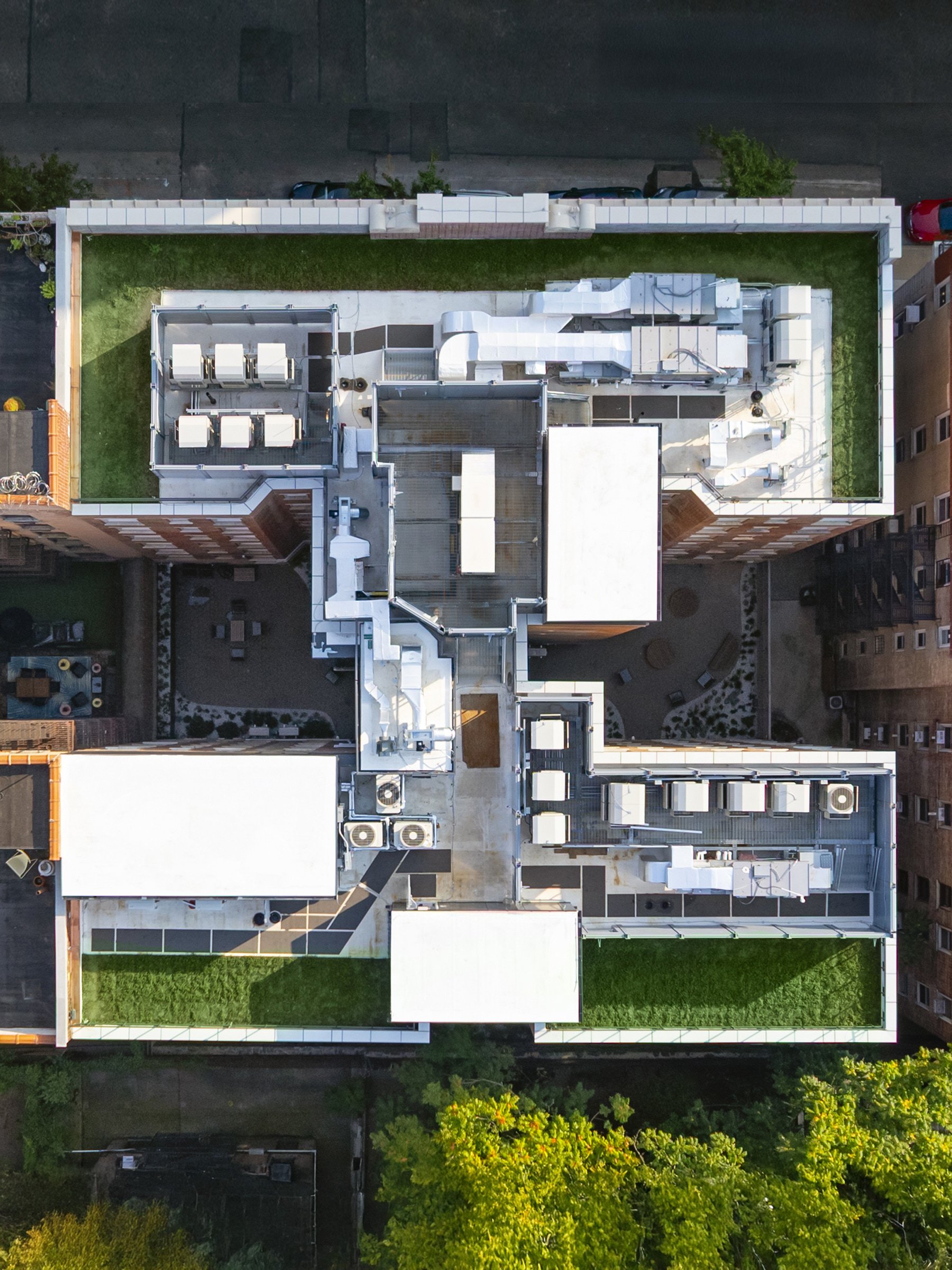
The study evaluated a real project that is currently in construction: a three-story vertical expansion of an existing steel-frame building. Both the existing building and the addition are engineered as a conventional steel frame with composite concrete slabs, on an efficient 20’x20′ structural grid. This became the baseline for comparison against three hypothetical alternatives: cast-in-place concrete, light-gauge steel framing with load-bearing demising walls, and mass timber using glulam beams and columns with cross-laminated timber (CLT) floor panels. The goal was simple: use LCA tools—in this case, the Revit plugin Tally—to track the “cradle-to-gate” carbon footprint of materials, from raw extraction and manufacturing through transport to the job site, to determine whether timber could have been a viable alternative to the chosen composite structure.
What the Numbers Showed
Steel, we discovered, has an outsized environmental impact relative to its weight. Although steel accounts for just 19% of the building’s mass in the baseline design, it represents 64% of its global warming potential (GWP). Even in the cast-in-place concrete alternative, 26% of the GWP is in the rebar, not the concrete mix, despite the steel constituting only 5% of the structural mass.
A related insight is the outsized role of floor slabs in driving carbon emissions. While the concrete alternative, unsurprisingly, had the heaviest mass and the highest overall emissions, we found that a single additional inch of concrete thickness translated into a 12% increase in GWP, or about 250,000 kilograms of CO2.
By contrast, the timber alternative was dramatically lighter, thanks to CLT’s efficiency and its ability to reduce slab thicknesses. And because timber sequesters carbon, it’s considered carbon-negative for LCA purposes. Timber structures often incorporate a lightweight concrete floor topping for durability and acoustics, but even this surface can be improved by the concrete mix: changing from a 6,000 PSI mix to a 4,000 PSI mix, by incorporating fly ash or other supplementary cementitious materials in non-structural applications, can realize an 8% reduction in carbon emissions.
But perhaps the most surprising outcome isn’t carbon-related at all. When we’ve priced timber and steel schemes, they come back roughly equal. The assumption that mass timber carries a steep premium simply didn’t hold true.
For us, the takeaways are clear:
- Use LCA tools. Software like Tally helps quantify trade-offs between steel, concrete, and timber, giving designers a basis for evidence-driven decisions.
- Evaluate structure first. Structural systems drive the majority of embodied carbon and are determined early in design. Testing alternatives up front is essential.
- Minimize floor slabs. Regardless of structural system, even small reductions in slab thickness can translate into massive carbon savings, making coordination with engineers and contractors critical.
- Challenge cost assumptions. Mass timber can compete on price, depending on grid dimensions, sourcing, and supply chain conditions. Don’t rule it out without real pricing.
- Source responsibly. The climate benefits of timber depend on sustainably managed forestry and, to minimize transportation emissions, proximity to the project site; good sourcing practices make the difference between genuine impact and greenwash.
- Consider end-of-life impacts. One benefit of steel is its recyclability; timber can also be repurposed at the end of a building’s lifespan, but if it is burned, all the carbon it had sequestered is released into the atmosphere, negating any climate benefits.
Why It Matters
If mass timber delivers major carbon savings without a cost penalty, it ceases to be a “boutique” or niche option, but rather a practical, competitive structural system. It can also help projects meet increasingly ambitious carbon reduction targets: cities like New York and states like California are already enacting embodied carbon policies, with more jurisdictions expected to follow, and public agencies such as NYCEDC are actively promoting timber in their circular design guidelines.
Ultimately, this study showed that embodied carbon reductions don’t always require radical design overhauls or budgetary leaps. Sometimes, they emerge from the simple act of putting conventional systems head-to-head with emerging ones—and by making small material choices at the structural level that cascade into enormous environmental impacts.