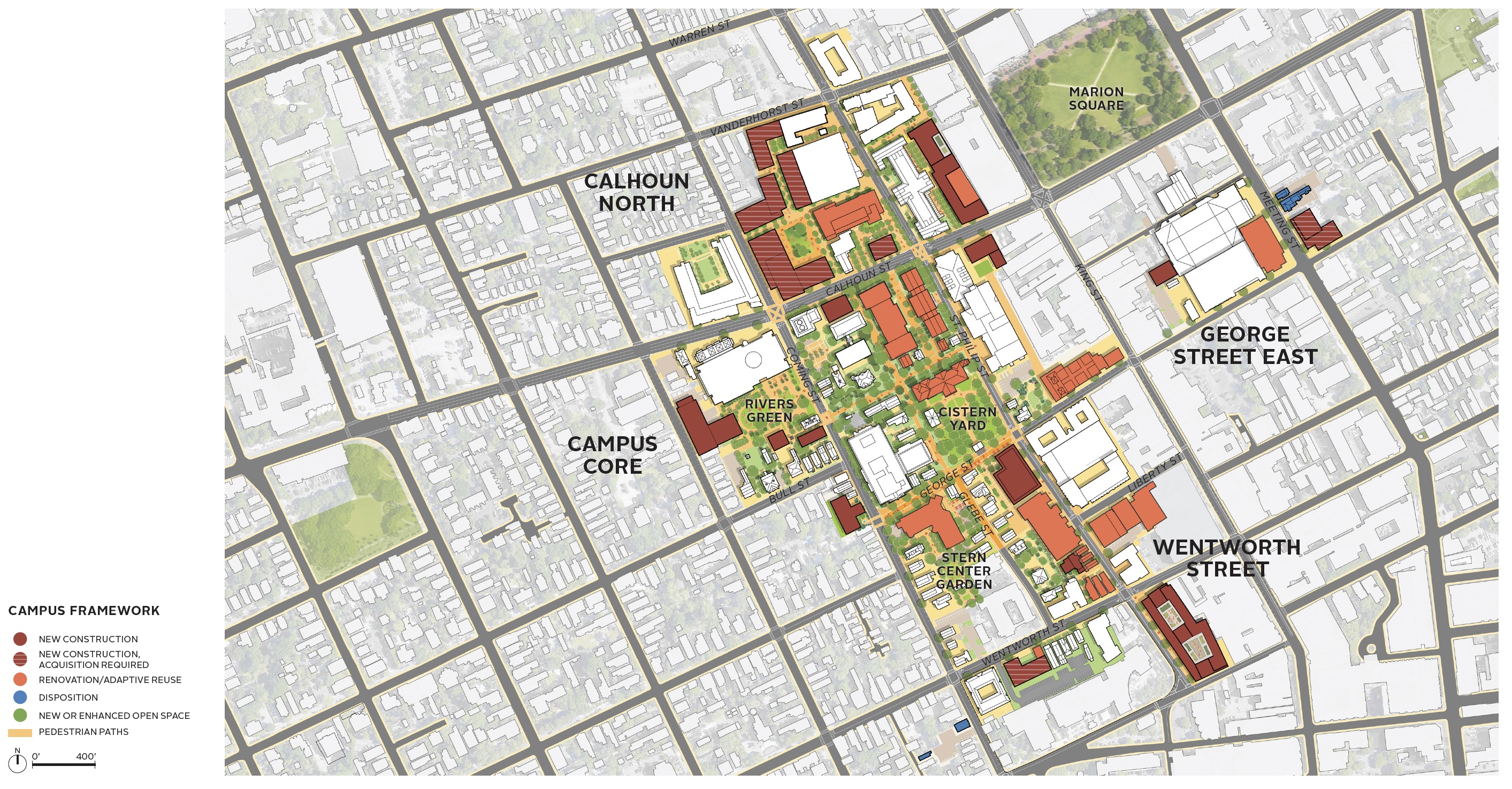
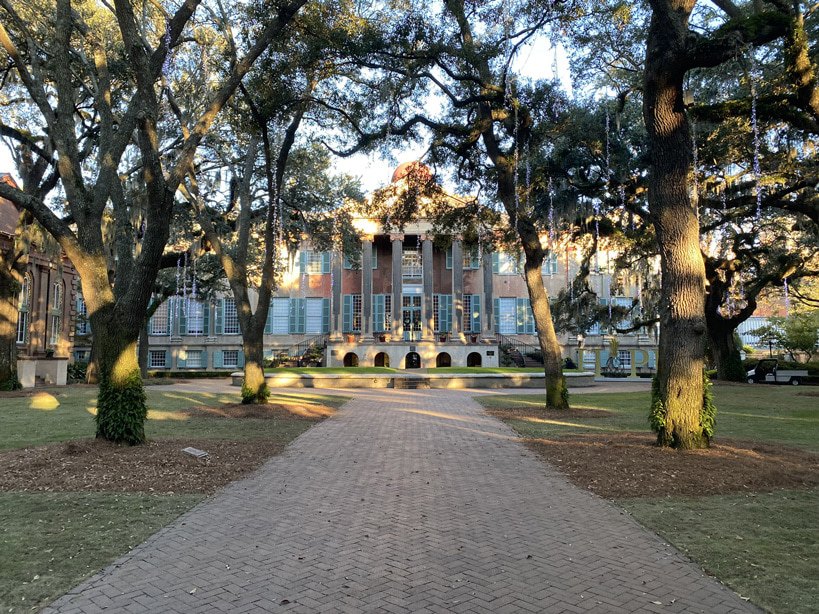
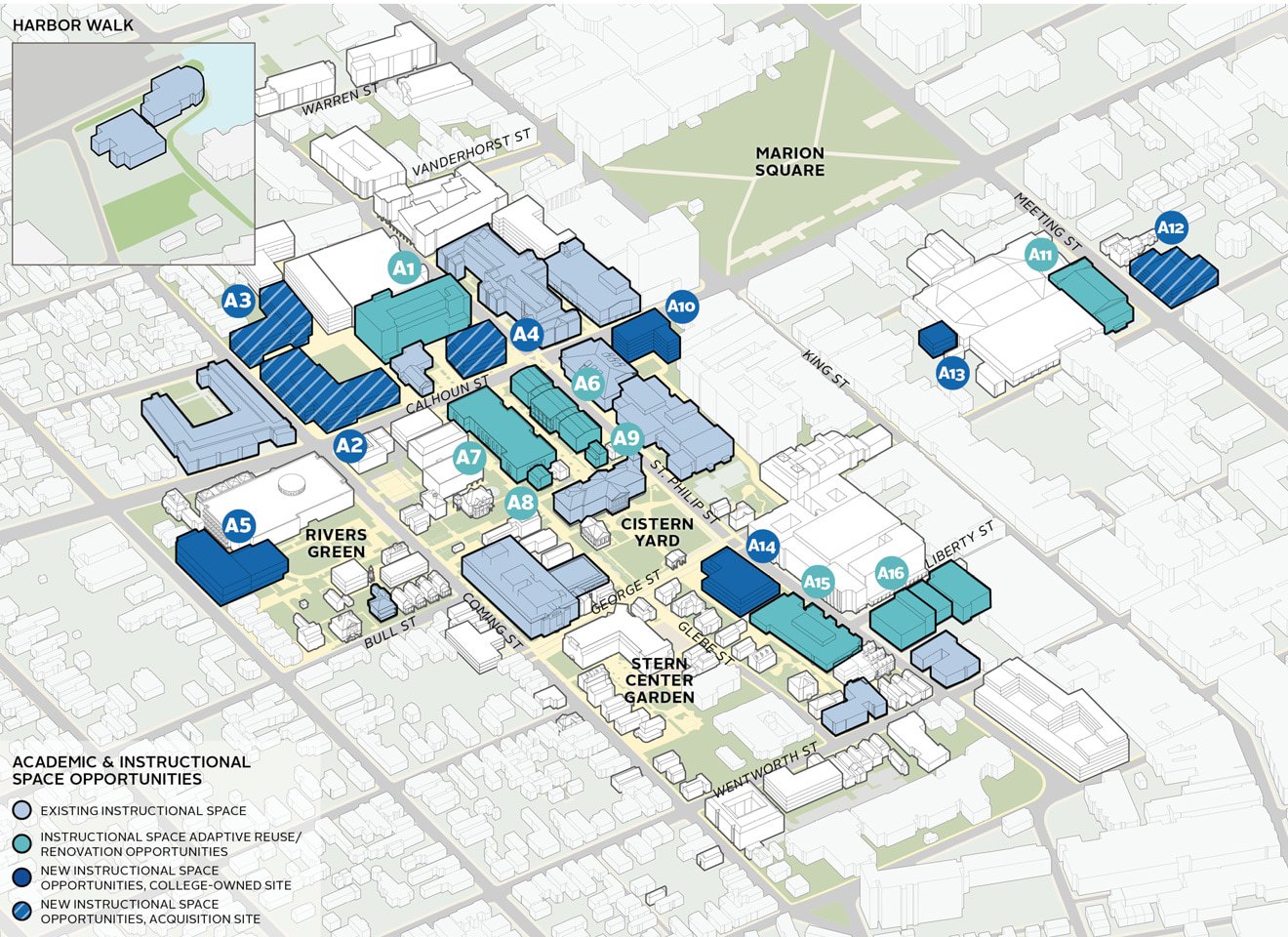
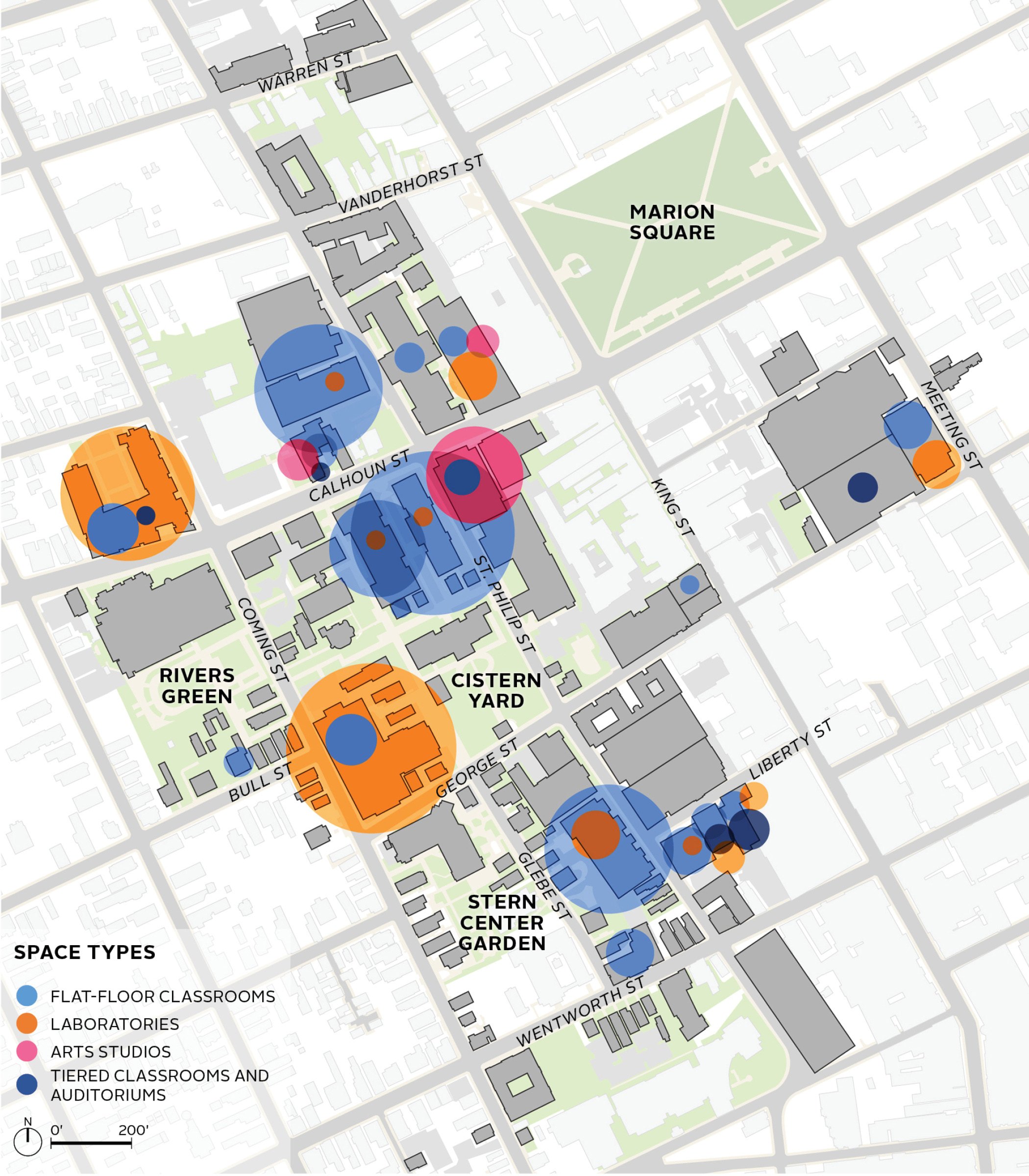
The plan for one of the country’s most beautiful and historic urban campuses proposes adaptive reuse strategies at three scales—the entire campus, individual buildings, and public spaces—to transform existing facilities within the complex heritage environment of downtown Charleston and the fiscal constraints of a public institution. Guided by four key overarching approaches—historic preservation and adaptive reuse, sustainability and resiliency, space optimization and innovative space, and campus in the region—the plan outlines a roadmap of opportunities for infill development, preservation and adaptive reuse, program relocations, property acquisition and disposition, housing renewal, landscape and open spaces, sustainable infrastructure, resiliency and stormwater management, and parking.
College of Charleston Campus Framework Plan

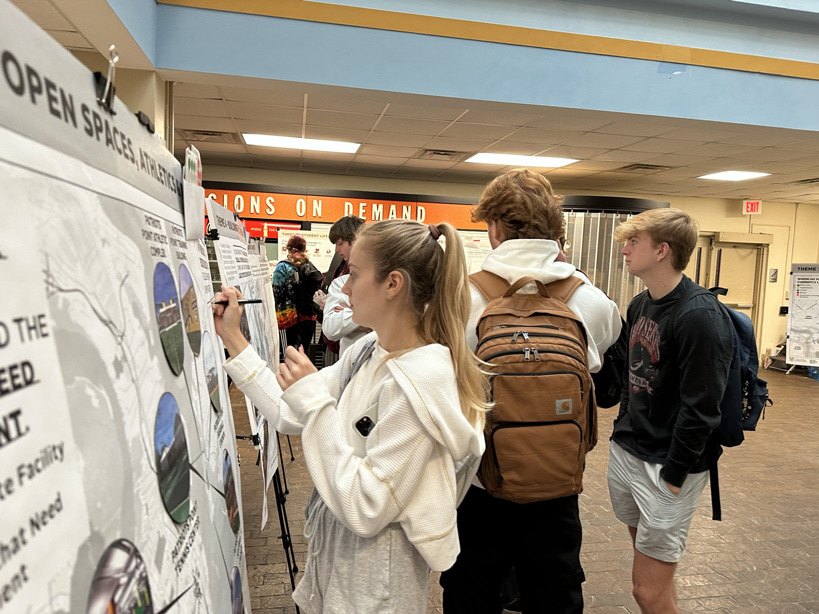
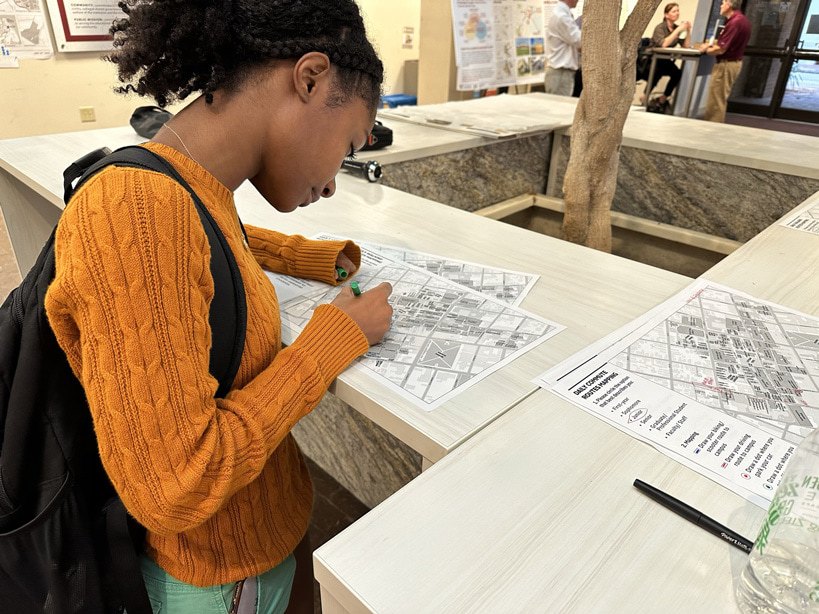

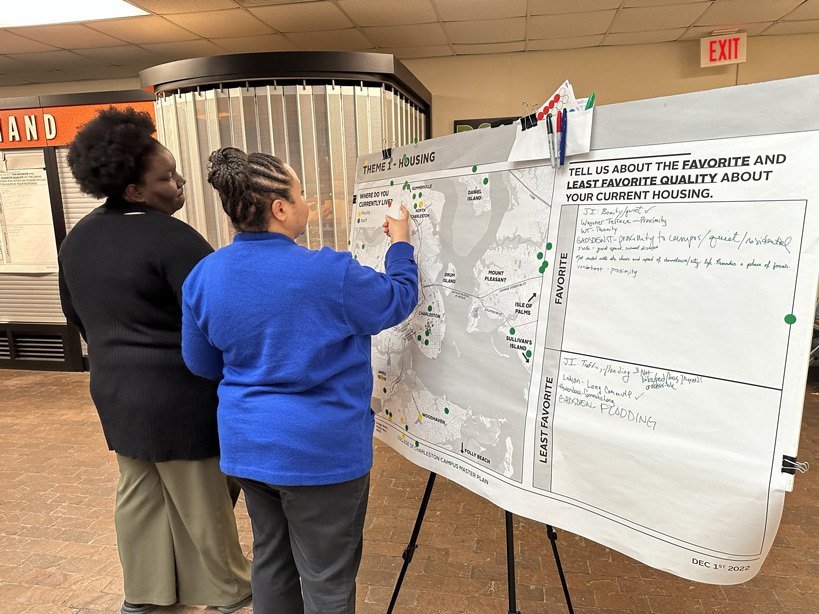
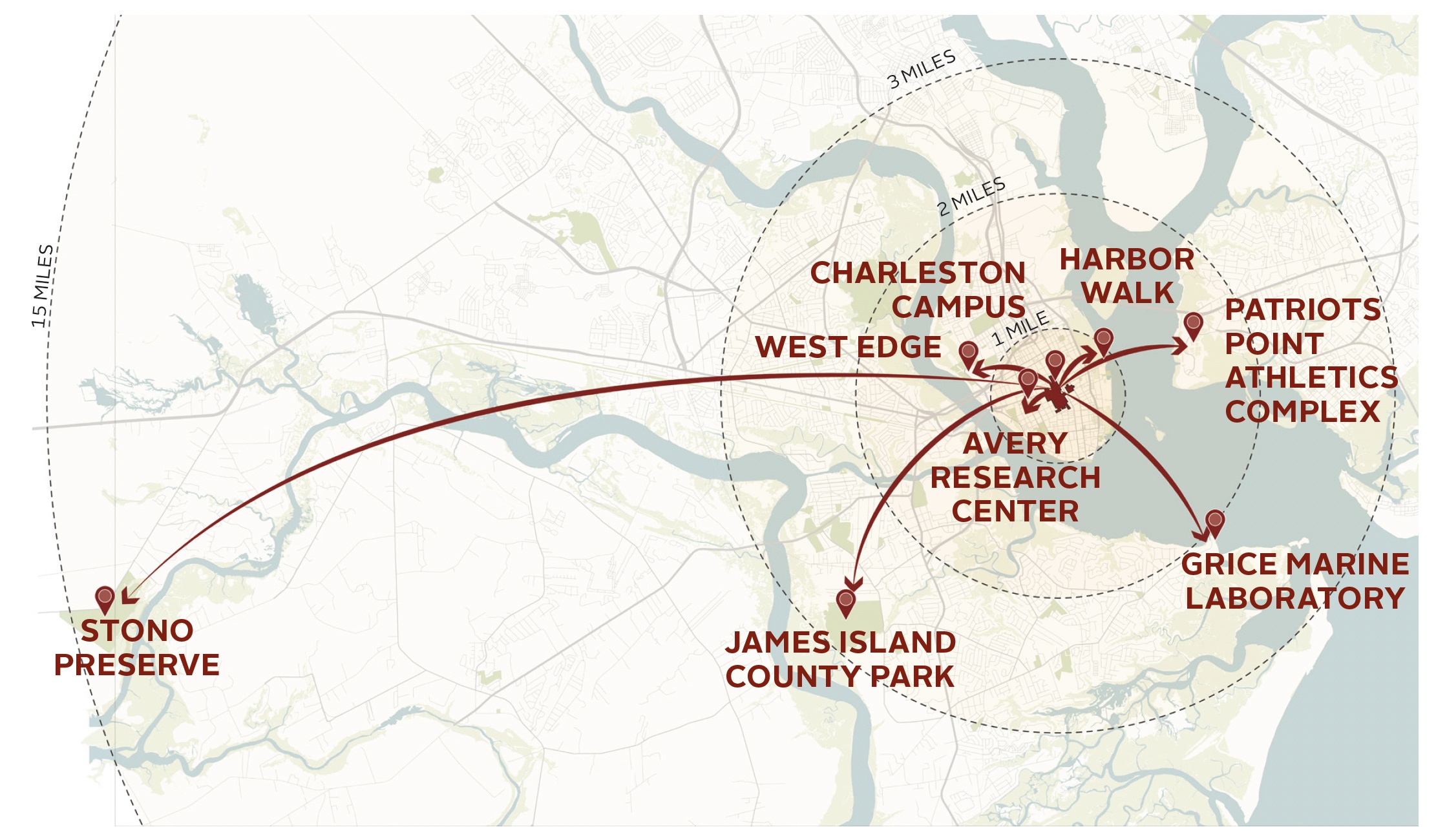
The 12-month planning process included a multi-pronged engagement with students, faculty, staff, to identify program needs and opportunities using digital surveys, open houses, live polling, focus groups, and engagement with students of Historic Preservation and Community Planning class. The process also included engagement with local and regional stakeholders to understand pressing regional issues, City efforts, and opportunities for the College to lead by example.
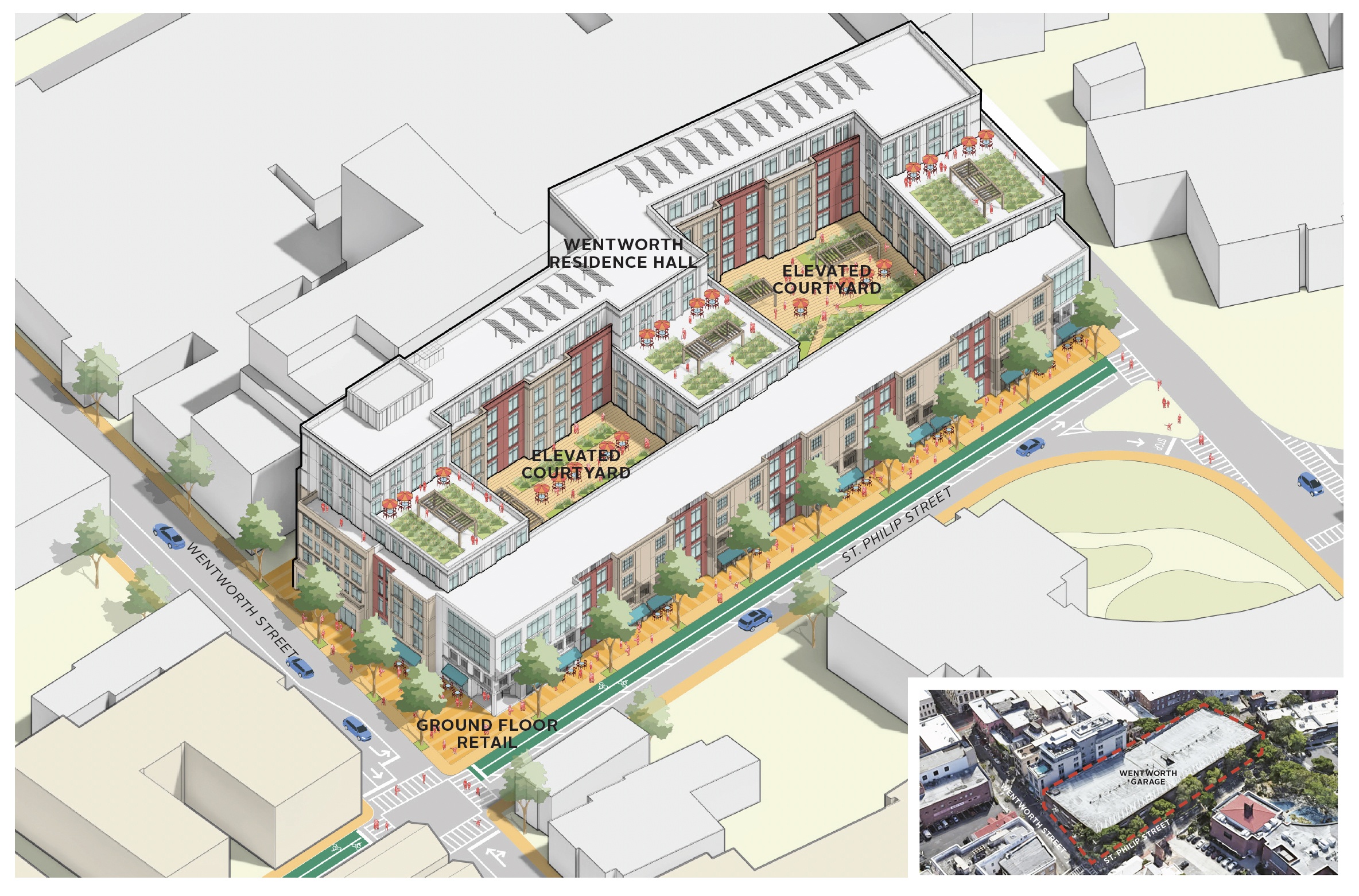
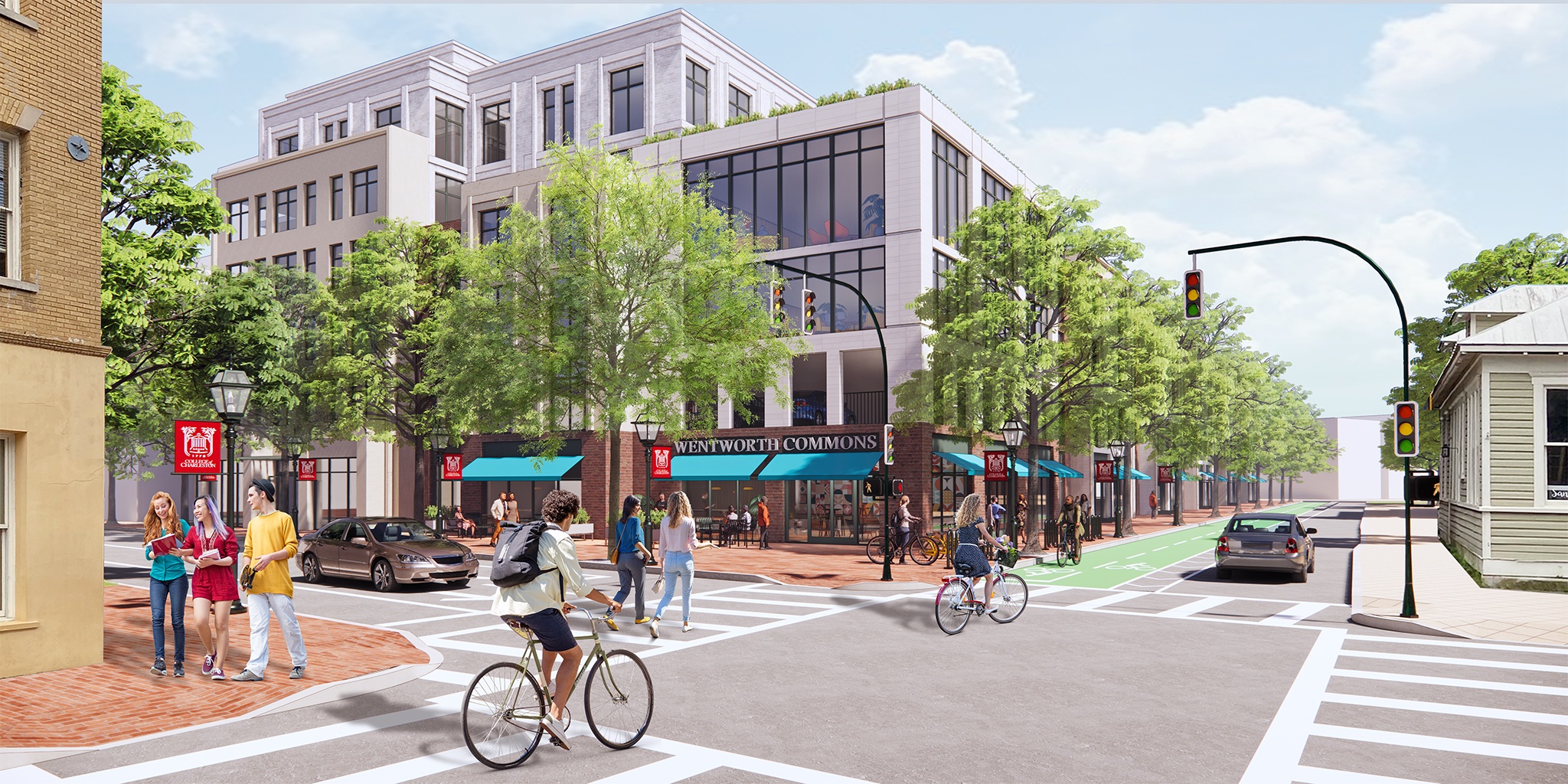
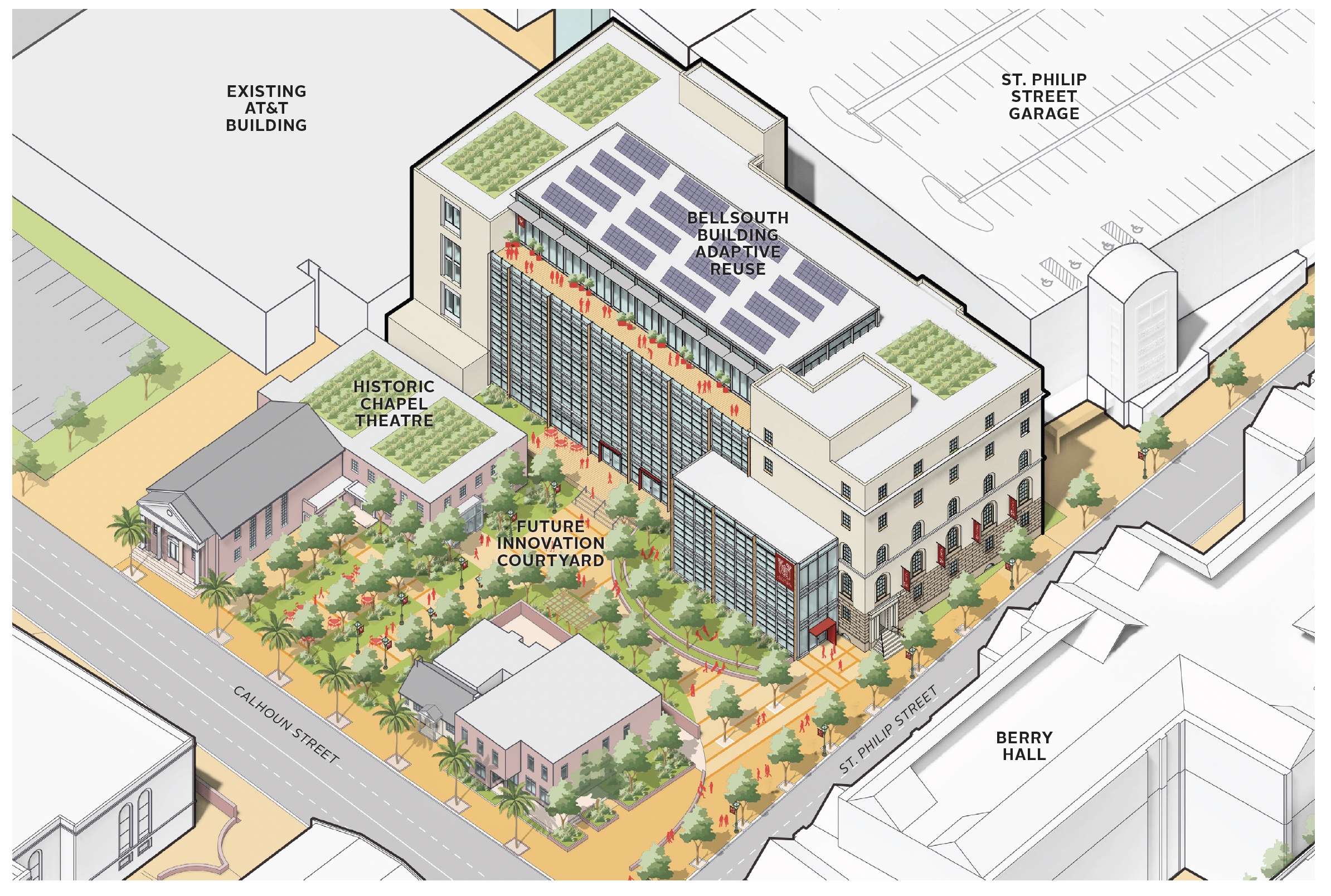
There is an opportunity to create a home base for the Department of Engineering and relocate the Computer Science program from Harbor Walk to the main campus, by relocating the existing mix of programs in the BellSouth Building. A triple-height south-facing atrium will provide direct natural light to the interior spaces of this deep-floorplate building. The atrium can provide space for interdisciplinary collaboration, social activity for the entire building, and inter-tenancy circulation with an open stair. The concepts shown represent one way of adaptively reusing an underutilized campus building.

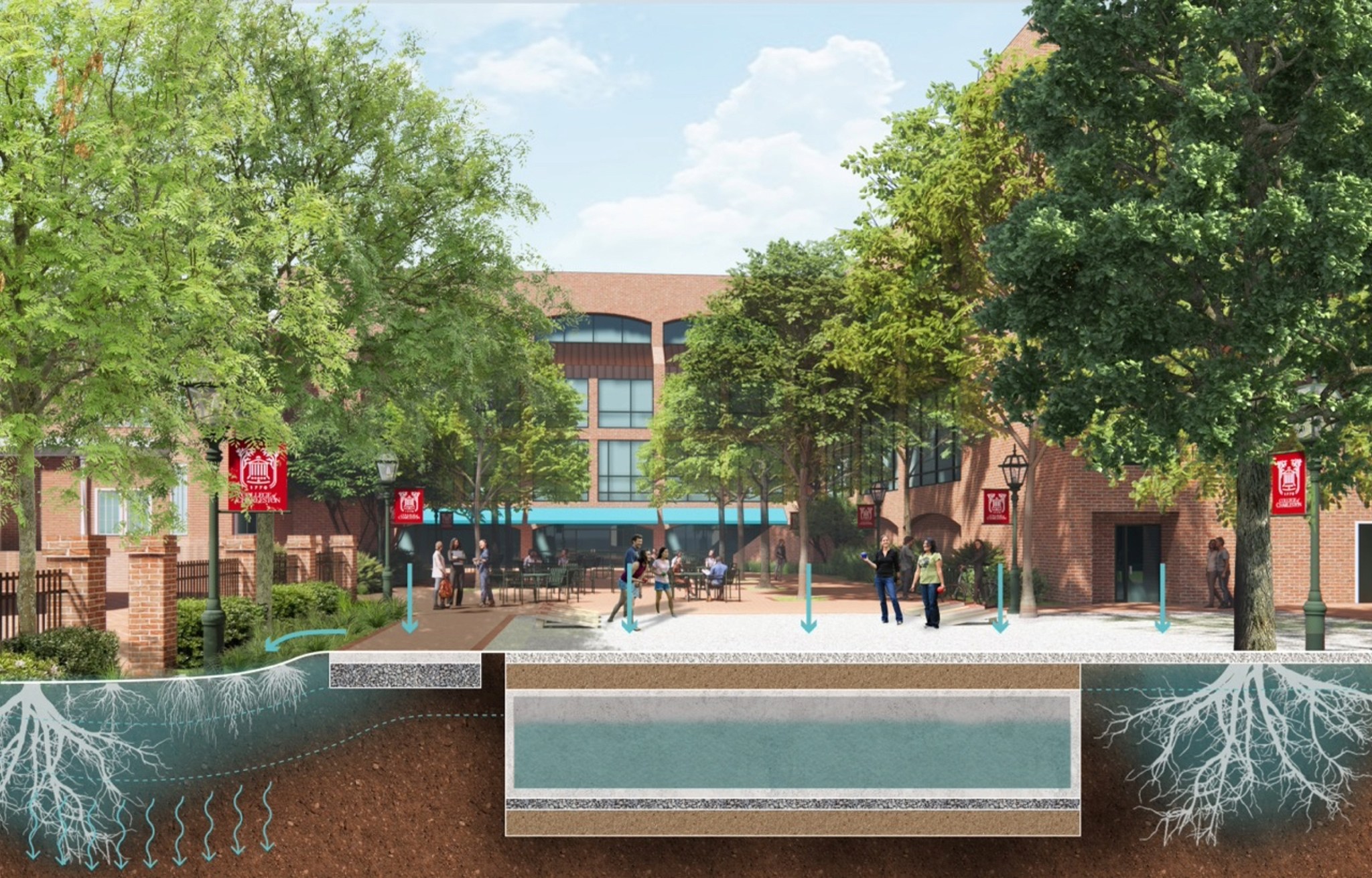
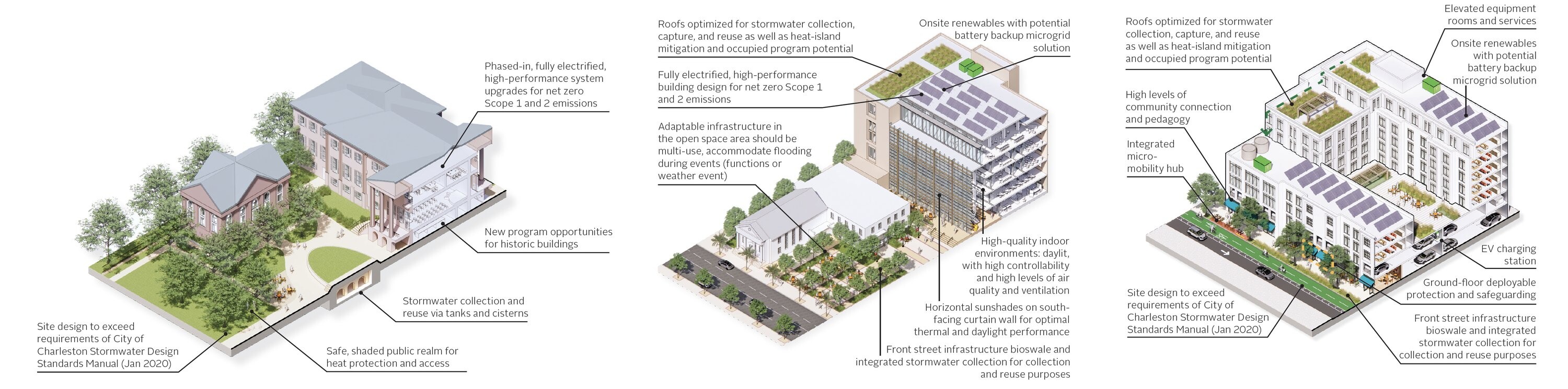
Building on the 2021 Sustainability Action Plan (SAP), the Campus Framework Plan provides recommendations and guidelines for campus development, as well as for strengthening partnerships with city and regional stakeholders to address regional resiliency challenges. Strategies for facilities, landscapes, and infrastructure support the goals and objectives of the SAP, including greenhouse gas reduction towards carbon-neutrality by 2050, transitions to resilient infrastructure, and district-scale solutions.
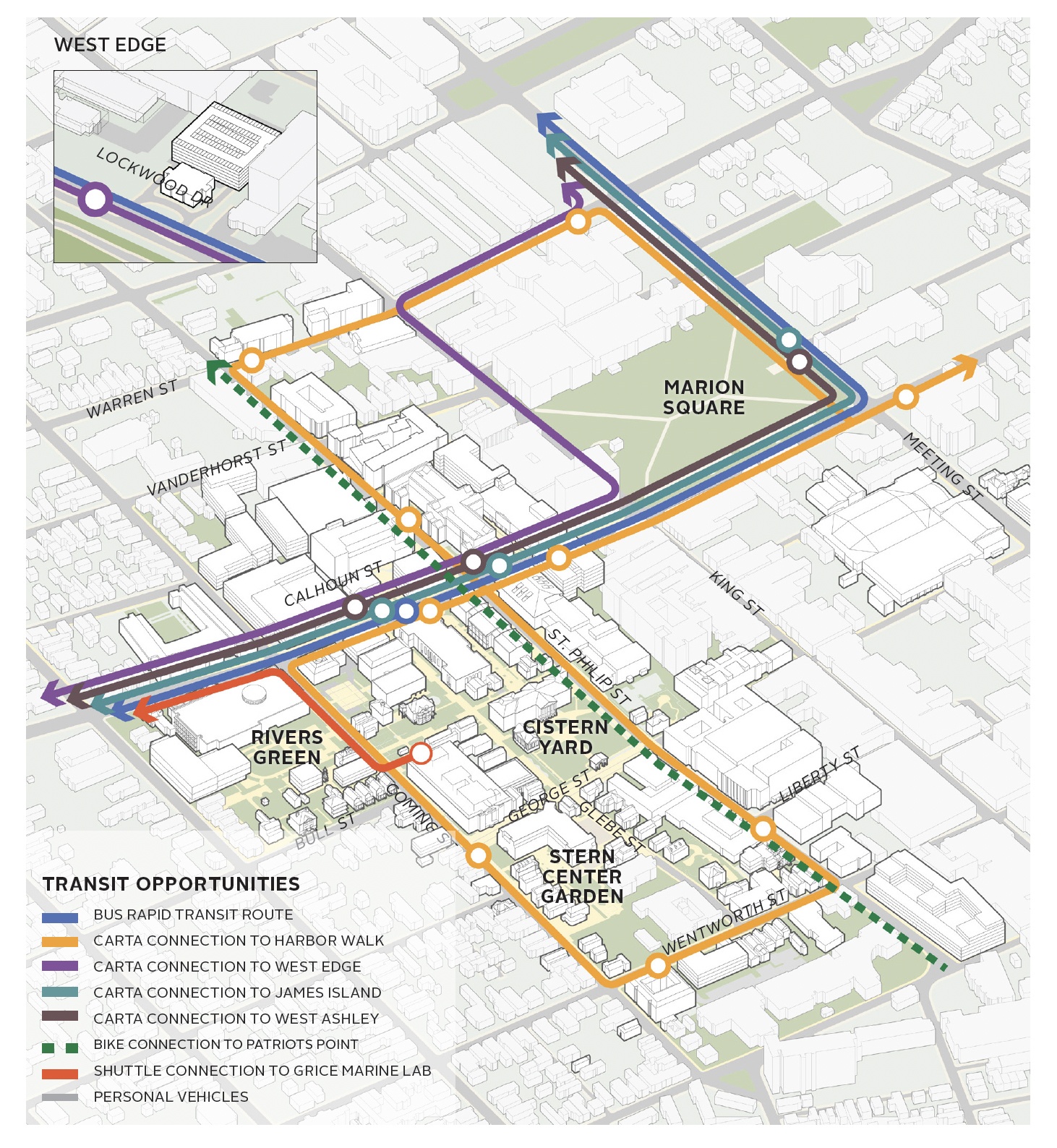
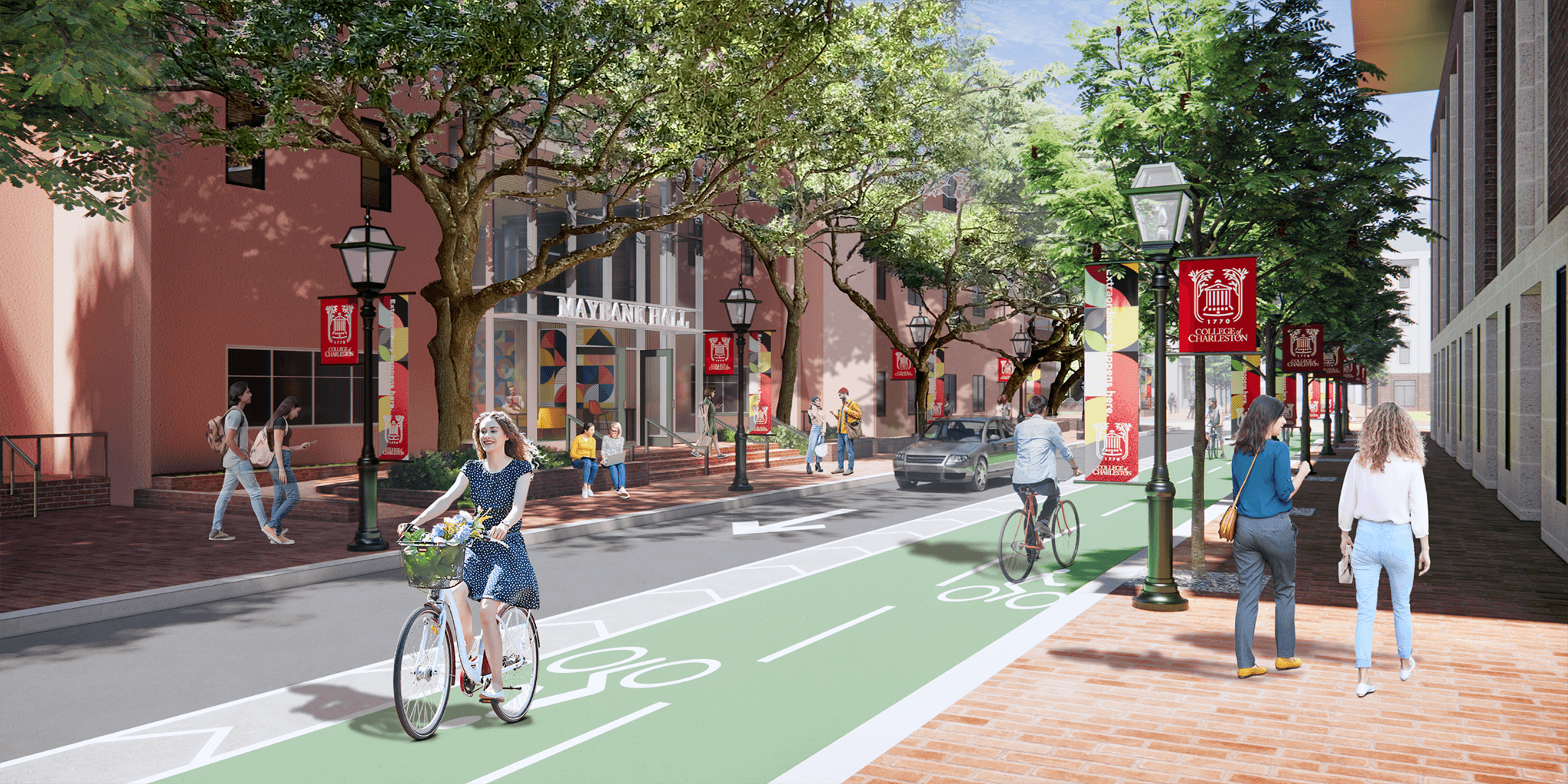
An integrated mobility strategy includes improved pedestrian and bike facilities, support for transit use, carpooling, and other methods of parking demand management, along with added parking capacity in strategic locations. For an urban campus with a large commuter population and limited development sites, the Campus Framework Plan approaches transportation and parking as a systemwide strategy, improving access to campus via multiple transportation modes and supporting partnerships with transit agencies, while strategically increasing parking supply and shared parking opportunities with nearby institutions.


Image Gallery
Project Credits
Awards & Press